Tim Reid Is Not Who You Think He Is
You think you know Tim Reid. The cool guy from WKRP in Cincinnati. Venus Flytrap. Maybe the dad from Sister, Sister. A reliable TV face who pops up, does his thing, and fades into the background of your Saturday afternoon reruns.
Let’s be honest — that’s not even close to the full picture.
Tim Reid is one of the most consistently underestimated figures in American television. He’s been fighting the entertainment industry’s worst impulses since before most people working in it were born. He built his own studio. He formed America’s first interracial comedy team. And one of his best shows got cancelled — allegedly — because the CEO of CBS was personally offended by a plot about junk bonds.
You can’t make that up.
Quick Bio
| Info | Detail |
| Full Name | Timothy Lee Reid Sr. |
| Age | 81 (born December 19, 1944) |
| Nationality | American |
| Net Worth | Approximately $2–4 million (sources vary widely — see below) |
| Surprising Fact #1 | He was a marketing rep for DuPont before ever acting |
| Surprising Fact #2 | He co-led the first interracial comedy team in U.S. history |
| Surprising Fact #3 | He built Virginia’s first full-service movie studio on 60 acres — then had to sell it |
He Came From Nothing — and That Part Isn’t Exaggerated
Norfolk, Virginia. 1944. Segregation was law, not theory. Tim Reid grew up watching the adults around him get crushed by a system designed to keep them there.
His home life was bad. His stepfather was physically abusive toward his mother, and Reid witnessed it regularly. His biological father struggled with addiction. The turmoil knocked his grades sideways and put him on a path toward worse outcomes.
What saved him, by multiple accounts, was Norfolk State University. The historically Black college straightened him out — academically and personally. He graduated in 1968 with a degree in Business Administration. The first Black man ever recruited by E.I. DuPont in a professional marketing capacity, he took a job in Chicago. He was going to have a normal corporate career.
Then a kid changed his life.
The Part Nobody Talks About
Tim Reid and Tom Dreesen — a white insurance salesman from Chicago’s south side — met at a Junior Chamber of Commerce meeting. They’d been put together to run an anti-drug program at a local school. After one of their sessions, a middle schooler looked up at them and said they were funny. That they ought to form a comedic team.
That was 1969.
What came next is one of American entertainment’s genuinely overlooked stories. Tim & Tom became the first interracial comedy duo in U.S. history. Full stop. They worked Black clubs, white clubs, Polish lounges, Playboy clubs, and venues that sometimes barely paid them. They opened for George Clinton and Sha Na Na. They performed in parts of the South where an integrated act wasn’t just unusual — it was dangerous.
Racist heckling happened. Violence threatened. On some nights it found them.
Dreesen later described the impossible position perfectly: in a white club where someone hated Black people, that person was angry at Dreesen for being there with Reid. In a Black club, someone who hated white people wasn’t mad at Dreesen at all — he was calling Reid an Uncle Tom. You couldn’t win.
They stayed together for roughly five or six years. Bitter arguments eventually broke the act apart. However, the narrative was eventually revealed in a book they co-wrote in 2008 called Tim & Tom: An American Comedy in Black and White. Dreesen died in June 2026 at age 86. Reid told reporters they’d managed to speak and laugh and cry in those final days. That friendship, built in the hardest years, outlasted everything.
The Network Couldn’t Handle What He Was Doing
After Tim & Tom split, Reid headed to Los Angeles. Small TV roles stacked up. The Richard Pryor Show. Rhoda. Maude. Then in 1978 he walked into an audition for a new CBS show about a small radio station in Ohio.
The character was a Black overnight DJ. Every young Black actor in Hollywood was in that waiting room.
Reid had conditions.
He told producers he wasn’t playing a jive-talking stereotype. He came from a Black community. The DJs he grew up listening to had style and depth off the air. He wanted that. A producer pushed back repeatedly, telling Reid directly that he wasn’t acting “Black enough” — trying, Reid has said, to make the character more foolish, more clichéd. Creator Hugh Wilson had to fight to get Reid cast. Then had to fight again to let Reid keep wearing an earring. And a beard.
“Man, you would’ve thought I shot a puppy,” Reid told reporters years later.
He kept both. Venus Flytrap became one of the most memorable characters in that show’s run. 83 episodes across four seasons. In Cincinnati, WKRP became a cult favorite. And Reid’s version of Venus — sharp, dignified, complicated — is a direct result of him refusing to let producers flatten the character into a familiar type.
The Show That Got Killed By Its Own Network’s Boss
Here’s where things get genuinely strange.
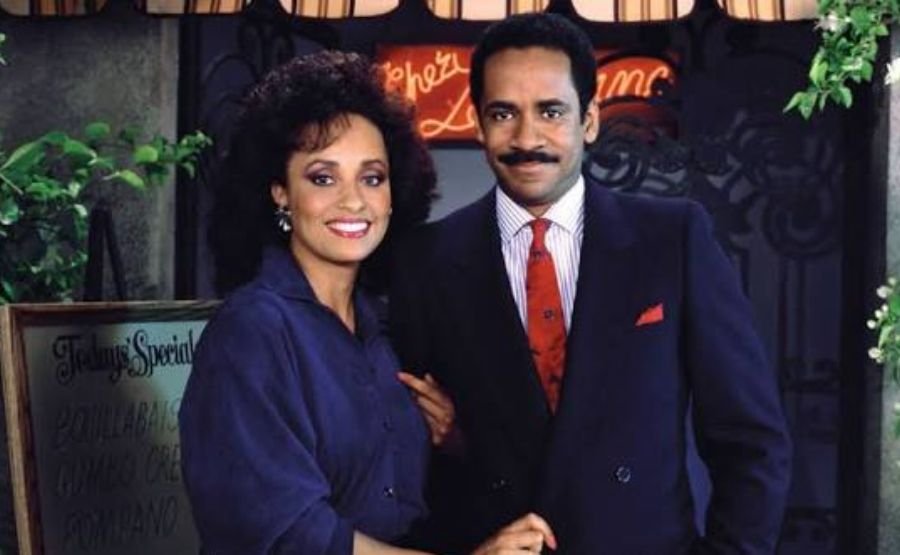
In 1987, Reid co-created and starred in Frank’s Place — a half-hour CBS dramedy about a college professor who inherits a New Orleans restaurant. No laugh track. Layered storytelling. Critics loved it. Reid executive-produced, starred alongside his wife Daphne Maxwell Reid, and received Emmy nominations for both acting and producing. He also won the Viewers for Quality Television Award for Best Actor in a Comedy. The NAACP Image Award came too.
CBS moved the show around its schedule constantly. “Not even my mother knew when it would air,” Daphne Reid said at the time. Ratings slipped.
Then it got cancelled. CBS apparently had a second season in pre-production when the order reversed.
Years later, Walter Cronkite — who sat on CBS’s board — reportedly told Reid the truth. The final episode of the season, “The King of Wall Street,” was a sharp critique of junk bonds and leveraged buyouts then sweeping corporate America. The new CBS owner, Laurence Tisch, had made exactly that kind of deal to acquire the network. Cronkite reportedly told Reid: “That episode really got Laurence Tisch upset.”
Two sources that cover television history have confirmed this account, citing Reid himself and the 2008 book. No formal documentation has surfaced, and no network statement ever addressed it. Tisch is deceased. But the story has circulated long enough, and with enough consistency, that it’s worth understanding — even if it cannot be verified the way a court record can.
What we know for certain: the show won awards, critics praised it, and CBS cancelled it mid-pre-production for a second season. The “King of Wall Street” episode exists. Tisch’s acquisition is a historical record. You can connect those dots yourself.
He Built Something Real, Then Had to Let It Go
After years of watching networks shuffle his shows around time slots and cancel them despite critical praise, Reid did something almost nobody in his position attempted. He left Hollywood.
In 1997, he and Daphne Maxwell Reid opened New Millennium Studios in Petersburg, Virginia. Sixty acres. A full sound stage. Post-production facilities. Virginia’s first fully equipped movie studio.
The Showtime series Linc’s was shot there — a dramedy Reid created, set in a Black-owned Washington, D.C. bar and grill. It ran for two seasons. Reid directed Once Upon a Time… When We Were Colored there, a film featuring Phylicia Rashad that opened at the Hollywood Black Film Festival’s fifth anniversary. The studio was a genuine attempt at Black-owned independent infrastructure in an era before that phrase became a talking point.
It didn’t survive.
Reid cited a lack of state incentives to bring film production to Virginia. Business dried up. In March 2015, New Millennium Studios was sold to Four Square Property Management LLC for $1.475 million. The buyer indicated plans to use the land for storage.
That’s the part worth sitting with. Reid spent years building something outside the system that kept cancelling his best work. The state didn’t back it. The economics didn’t support it. He sold a film studio for less than the price of a mid-range Los Angeles home.
The Money Situation Is Honestly a Mess to Pin Down
Let’s be direct: nobody agrees on Tim Reid’s net worth. Published estimates online run from $2 million to $10 million depending on which site you find, with one outlier suggesting $35 million by comparing him to Don Cheadle, which reads as exactly the kind of math you shouldn’t trust.
The most commonly cited figures cluster between $2 million and $4 million. Celebrity Net Worth, which is the most referenced source on this question, puts it at approximately $2 million. Other sites say $3–4 million. The $10 million figure appears on sites that appear to recycle numbers without sourcing.
No audited financial statement exists here. These are estimates from public data and career-based projections. The studio sale in 2015 for $1.475 million is the one publicly documented transaction that gives any hard number. For someone with 50+ years in the industry, four major network series, writing credits, producing credits, and independent film work, the $2–4 million range suggests a career spent prioritizing ambitious projects over commercially safe ones. Which, honestly, tracks.
The Things Most People Miss
Reid was the first Black marketing professional recruited by DuPont — worth noting given how much is made of his entertainment career.
He’s been actively anti-drug since 1969, years before it was a celebrity talking point. He created the anti-drug video Stop the Madness in 1986.
He was in South Africa during apartheid and witnessed an audience of 5,000 people — Black and white — go into collective euphoria when a Bob Marley song played. He nearly got arrested that night. The officers who let him go, Reid has said, were fans of WKRP.
Frank’s Place still doesn’t have a proper DVD or Blu-ray release. Music rights issues have kept it locked away from home release for decades. Due to licensing issues, one of the most highly acclaimed Black-led programs of the 1980s is almost unavailable to new viewers.
His Legacy Media Institute, founded in 2009, mentors Black filmmakers and connects them with industry professionals. It exists largely without the kind of press coverage given to celebrity-attached foundations.
He received honorary doctorates from both Norfolk State University and Virginia State University, and was named Virginian of the Year by the Virginia Press Association in 1998.
The Contradictions Worth Noting
Reid’s public image is almost entirely positive. He’s well-regarded, respected in the industry, and largely written about with reverence.
What’s trickier is the pattern: almost every ambitious project Reid co-created or starred in that pushed for complexity — that refused easy storytelling — either got cancelled despite critical success or struggled to reach audiences. Frank’s Place. Snoops. Linc’s. The studio itself. You can read that as a market failure. You can also read it as evidence that the infrastructure around these shows — networks, distribution, state support — wasn’t built to sustain that kind of work.
Reid himself has said that his critically acclaimed work “often failed to meet with sustained audience acceptance.” He’s been honest about it. But the cancellation of Frank’s Place — if Cronkite’s account is accurate — suggests something more deliberate than an audience indifferent to quality television.
Those are two different problems. And Reid has lived through both.
Final Words
Tim Reid at 81 is still working, still teaching through the Legacy Media Institute, still giving speeches about media power and Black storytelling. He lives in Portsmouth, Virginia. He’s been married to Daphne Maxwell Reid since 1982. His first comedy partner died earlier this year, and Reid was on the phone with him in those final days.
He built a body of work that stretches from the civil rights era to streaming-age television. He refused to play stereotypes when that refusal had real professional costs. He built infrastructure when the industry wouldn’t provide it, and he sold it when the economics collapsed around him.
In fact, the “legend” framing is detrimental to him. It softens everything he pushed against. Tim Reid isn’t a warm retrospective. He’s a case study in what happens when someone keeps making smart, principled decisions inside a system designed to reward something else.
You decide if that’s inspiring or infuriating. It’s probably both.
FAQs
1. What is Tim Reid most famous for?
Most people know him as Venus Flytrap, the coolly stylish overnight DJ on WKRP in Cincinnati (1978–1982). He played that role across 83 episodes. His work on Frank’s Place, Sister, Sister, and That ’70s Show built a television career spanning five decades.
2. How did Tim Reid get into entertainment?
He didn’t plan it. After graduating from Norfolk State University and working as a DuPont marketing rep, he met comedian Tom Dreesen at a Junior Chamber of Commerce meeting in Chicago. A middle-school kid told them they were funny, and they formed a comedy duo in 1969. That led — eventually, after years of nightclub work — to his television career.
3. Who is Daphne Maxwell Reid?
She’s Tim Reid’s wife, married since December 4, 1982. An actress and model, she co-starred with him on Frank’s Place and Snoops, and became widely known for playing Vivian Banks on The Fresh Prince of Bel-Air. She was also his co-founder on New Millennium Studios.
4. Why was Frank’s Place cancelled?
Officially: ratings declined and CBS wasn’t willing to wait for an audience to build. Unofficially, Reid was told by CBS board member Walter Cronkite that CBS owner Laurence Tisch cancelled it because an episode critically depicting junk bond deals upset him personally — the same kind of deal Tisch had used to acquire CBS. No formal statement from CBS ever addressed this claim.
5. What was New Millennium Studios?
A 60-acre film production facility Reid and Daphne Maxwell Reid opened in Petersburg, Virginia in 1997 — the first full-service movie studio built in Virginia. It housed a soundstage and post-production facilities. Lack of state incentives to attract production companies eventually made it unviable, and it was sold in 2015 for $1.475 million.
6. Is Tim Reid’s net worth publicly known?
No. Published estimates vary wildly, from $2 million to $10 million, with most credible sources in the $2–4 million range. The only publicly confirmed transaction is the 2015 sale of New Millennium Studios. Treat any specific figure as an estimate, not a verified figure.
7. What is the comedic performance of Tim and Tom?
Tim Reid and Tom Dreesen formed what’s described as the first interracial comedy duo in American entertainment history, debuting in September 1969. They worked clubs across the country — including in parts of the South during intense racial tension — for roughly five or six years. They co-wrote a book about the experience in 2008. Tom Dreesen died in June 2026 at age 86.
8. Did Tim Reid face racism in Hollywood?
He’s talked about it extensively. A producer on WKRP told him directly he wasn’t acting “Black enough” and tried to push the Venus Flytrap character toward stereotyped behavior. Reid pushed back. He’s also spoken about the industry’s broader pattern of cancelling or undervaluing work that featured complex Black characters and storytelling.
9. What is the Legacy Media Institute?
A non-profit Reid founded in 2009, dedicated to mentoring aspiring Black filmmakers and connecting them with professionals across the film and television industries. It operates without the mainstream visibility of larger celebrity foundations.
10. Has Tim Reid had any legal controversies?
No publicly recorded legal controversies, criminal charges, or civil suits appear in available reporting. Nothing in the research base — across more than a dozen sources — indicates charges filed, lawsuits settled, or legal disputes involving Tim Reid personally.
11. What happened with Frank’s Place and home video releases?
Music rights complications have blocked Frank’s Place from receiving a proper DVD or streaming release for decades. Episodes were briefly available on YouTube before being pulled for rights reasons. The show, despite its awards and critical reputation, remains largely inaccessible to new audiences.
12. Is Tim Reid still working?
Yes. As of 2026 he has recent acting credits and remains active with the Legacy Media Institute. He appeared in Greenleaf and Love Is on OWN, and has talked about his continued desire to direct. He lives in Portsmouth, Virginia.
Beyond the scroll, find stories that stay with you — The Velvet Magazine.


One Comment